Wednesday, January 15, 2020

New chapter from PeterMac's FREE e-Book - Chapter 35: Mirage

A Diversion on Observation, and the influence of our previous Knowledge and Beliefs

This chapter is something of a diversion.
In it I shall examine how we can think or believe we see something, when in fact the objective and scientifically provable truth of the matter is that we either did not, or that we saw something else.

We were not ‘lying’ or being dishonest when we told what we saw. We saw something and our mind forced us to interpret it in a particular way.

We can only fit what we see into categories we already know and understand. Before the discovery of Oxygen the phenomenon of burning could not be interpreted as oxidation, and so Phlogiston was a rational but ultimately flawed attempt at explanation.

Medical treatment is the most obvious case of rapidly changing knowledge, exposing millennia of previous professionally agreed diagnosis and treatment as nothing better than ignorant superstition. Even ‘modern medicine’ is being exposed in a similar way. The last frontal lobotomy was performed as late as 1967, and the leading Medical journal in the UK is The Lancet, betraying its origins in the bloodletting prevalent as a treatment and recommended in medical texts up to 1923, but now condemned as ignorant and misguided barbarism. Every new treatment implicitly criticises the previous one. We no longer prescribe Insulin Shock Therapy for schizophrenia, cocaine for toothache, cigarettes to “ease the chest”, or Bed Rest for “hysterical women”.

Through history this has always been the case. Historical observations can be reviewed and interpreted in the light of modern scientific knowledge, and we must be humble enough to recognise that our current observations and explanations will in turn inevitably be interpreted differently in the future. Archaeologists are recognizing this and in some places are deliberately leaving significant parts of sites untouched for future generations to explore.

Continental Drift started as an interesting theory, ridiculed by Sir David Attenborough’s own Cambridge professor, which evolved into Plate Tectonics and remained at the level of highly probable theory until someone sent a submarine down to the mid-Atlantic ridge and actually filmed it happening. And Sir David had the last laugh – but only for the time being.

As Agent K said in “Men in Black”, “Fifteen hundred years ago, everybody knew that the Earth was the centre of the universe. Five hundred years ago, everybody knew that the Earth was flat. And fifteen minutes ago, you knew that humans were alone on this planet. Imagine what you'll know tomorrow.
      [Wrong about the flat earth, incidentally. They knew it was a sphere, just not how big it was.]

So what follows is a quick trip through a Case History.

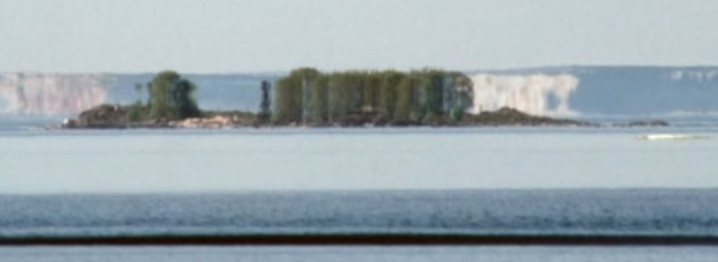
Once or twice a year I am able to see North Africa from my house on the coast of southern Spain.
Like this > > >
It is the range of mountains called the Riff in northern Morocco.

The peaks in the Riff rise to 2500 m. and are big and pointy as are the mountains behind me. Both coasts lack a coastal plain, with the mountains apparently rising straight out of the deep sea.

[Both are formed by the same geological event, as the African plate pushes north into the European plate and forces up mountains which run E-W; the whole of Spain then gets lifted up so the central meseta (plateau or tableland) is around 700 m. or 2,500 ft.
The whole thing goes on pushing north until it hits France and the resulting folds form the Pyrenees. It is moving at about 1 cm. a year. That same pressure causes the north coast of Africa to wrinkle up. It explains why there is limestone with shells from the Jurassic era 2,500 feet up in the air !
End of geography lesson.]

BUT – – I am 140 m. above sea level, so the visible horizon can be calculated at 42 km.
AND – – that bit of Morocco is about 190 km. away
horizon (in km.) = 3.569 x √ height of observer (in metres)

The Mathematics behind this Calculation
 
This calculation should be taken as a guide only as it assumes the earth is a perfect ball 6,378,137 metres radius. It also assumes the horizon you are looking at is at sea level. A triangle is formed with the centre of the earth (C) as one point, the horizon point (H) is a right angle and the observer (O) the third corner. Using Pythagoras's theorem we can calculate the distance from the observer to the horizon (OH) knowing CH is the earth's radius (r) and CO is the earth's radius (r) plus observer's height (v) above sea level.

OK so far ?

I am clearly seeing much more than just the tip of the mountains.

Some more calculations

Horizon distance (km.) = 3.569 x √ height (m.)
The terrace of my house is approx. 140 m.      √ 140 = 11.832
So 3.569 x 11.832 = 42 km.

Clearly I cannot directly see the coast of Morocco, which is 160 km. at its nearest point (Ceuta) and 190 km in the direction I am looking.
But I am clearly seeing a mountain range, not a cloud bank.
The high peak above Chefchaouen (Jeb al Kalaa) is 2200 m.  and   √ 2200 = 46.904

So the horizon visible from that peak will be given as 3.569 x 46.904 = 167 km.

Adding the two distances we get
42 + 167 = 209 km.
Distance from my house to Jeb al Kalaa = 214 km.
So it is NOT possible to see even the peak of the mountain directly.
Let us go higher
The top of Pico Veleta, the ski slope above Granada, Sol y Nieve, is 3340 m.   √ 3340 = 57.793
From there the visible horizon is
3.569 x 57.793 = 206 km.
Adding the two horizon distances we get.   206 + 167 = 373 km.

Pico Veleta to Jeb al Kalaa is 269 km
Which sounds promising. There should be a direct line of sight

but let us do the reverse calculation
206 minus 167 = 39 km. This is what we may term the “overlap” distance between the horizons
Putting the 39 km back into the equation and reversing the procedure
If 3.569 x √height = 39 km, then √height  = 39 / 3.569  = 10.927 and 10.927²  = 119 m.
Therefore height = 119 m.

So you could only directly see the top 119 metres of the mountain, – at a distance of 270 km – against a sea horizon.

Could this be done without a powerful telescope and almost perfect air conditions, in daylight ?
119 m. at a distance of 270,000 m, will subtend an angle of only 90 seconds of arc.
(Pythagoras says so)
The resolution limit of human vision is around 0.006 degrees. That is 22 seconds of arc
(The sun and the moon subtend 31 arc minutes. Half a degree).
(Forget stars. They act in a different way, as their light is scattered by the atmosphere giving a larger apparent size than Pythagorus would allow !)

So even from the top of Pico Veleta it would be only the size of a grain of salt on your finger at the end of your outstretched arm.            Salt grain 0.3 mm. Arm 0.75m. Angle = 0.0229º = 83 seconds

And it would be only just poking out over the horizon with nothing much either side to draw your attention to it.

* * * *

For those who have not keeled over with boredom already, I believe we have established that it is impossible to see the mountain above Chefchaoen by direct line of sight. Even with a telescope.
Even from a high mountain.

And yet I did.

And I have the photos to prove it.

Or more accurately – I believe I did.

As do many other people who have reported this on-line and in local papers.

Let us allow ourselves to think that this might be a strange nautical related phenomenon, as they now think happened with Titanic.
In brief this involves clear and flat calm conditions, with layers of extremely cold air, and so the stars reflected off a bank much lower down, the ice was not visible, and the lookout had no chance.

The documentary at https://www.youtube.com/watch?v=UxQvij8Ttug is revealing and instructive. The explanation from 1:00, then clips at 1:11 and 1:17 are enough to make the point.

These are stills from that presentation.

A passing ship
becoming this, with an inverted image above the real one
And an island with a clear horizon beyond
becoming this
My photos were taken on Christmas Day, 25/12/19 around 6:30pm Spanish time

Here we had good clear and flat calm weather, so Morocco would have been hot during the day. At dusk as the air begins to cool it flows down the mountain slopes, generating a Catabatic or Föhn wind, so forming a gentle but steady stream of warm air which then floats on the layer of cold air over the sea.

It seems to fit

It would also explain why I notice this only once every couple of years. Everything will have to be perfect. A bit of westerly through the Gibraltar Strait will disrupt the layering effect.
And also why I have only seen it at sunset, when the mountain begins to cool.
We get catabatic breezes in the summer here on the complex from the hill behind us, which can make the sun shades flap for a few minutes, but everything has to be perfect to notice the effect.

Just for comparison I shall attach photos of what the skyline normally looks like on a clear evening, with ships in the offing, and one of a line of cloud showing where the mountains in the Riff are, but well below any possible sightline.

And then we look for more evidence
The sea temperature was around 16ºC
The temperature in Chefchaouen had been climbing to near 26º for much of the day,
by 1800 the wind fell to 3mph = Beaufort force 1 = "light air". smoke drifts, small ripples on the sea and it was due SOUTH.     In other words a catabatic wind.
So we have warmer air drifting downhill and out across a flat calm cold sea, none of it disturbed by wind or waves, and at 1830 I am able to take photos of the mirage, and it stays until dark.

The three things have to occur simultaneously.
Which is perhaps why it is so rare

So I perform some more observations and calculations.

The bearing of small chimneys to the right of the pyramidal roof is a good starting point.   Using a crude but effective “compass” App on my phone, and two screws as sights (!) I get a bearing of 213º.
Using “google maps” to obtain the coordinates of the two points and putting them into the computer programme it gives me 215º. Which I hope you will agree is within the limits of the thickness of two screws resting on a phone on a pillar on a roof seen with the naked eye.
It also confirms google maps’ distance of 214 km.

THEREFORE:
It is a mirage
I did NOT see or photograph the mountains
I saw and photographed an image of the mountains caused by a particular set of meteorological circumstances.
It was real only in the sense that a reflection in a mirror is real.
QED

OK. I know it is not actually called a mirage.

Strictly a Mirage is an inverted image, a reflection of what is on the ground, often water, projected onto an air layer higher up, so we can see it. As in the photo of the ship supra

The technical name for what I observed and photographed is “Looming”, as in the standard English usage of an image ‘looming’ up, or ‘looming’ out of the mist. If you google that term you will see a lot of technical and Nautical stuff about it.

Looming” keeps the image the right way up. It is not a reflection, it is a significant refraction.

Something like this
QUOTE: LOOMING: The appearance above the horizon of a distant object that would normally be hidden below it. This effect is caused by unusually large terrestrial refraction, usually due to a thermal inversion. Looming is the opposite of sinking. Both are refraction phenomena, but not mirages.

What do I normally see ?

This. Spot the blob on the horizon
Which resolves with a telescope into this . . . Not a mountain.
Or this, a bank of cloud on the far horizon showing where the Riff mountains range is, but not bringing it into view.
Another mystery solved ?

What has this to do with the case that interests us ?

We can only understand things by reference to our own belief system and within our own corpus of knowledge.

As we know some belief systems, particularly religious ones, will not permit new knowledge to intrude. Galileo Galilei and several others have had that problem. Western philosophy has now matured a little and seems more open to new scientific findings, although it is far from perfect.

In classic detective stories the lay people are frequently shown concentrating round the victim or at the ‘scene of the crime’. The ace detective is then depicted doing something completely different, unexpected, and often apparently inexplicable – examining a pocket watch, looking for cigarette stubs in the neighbouring field, or asking for cheque stubs or to see a diary or address book.

Why ? Because the detective has specialised knowledge, not of this crime in itself, but of the importance of detaching one’s mind from the obvious focus and opening it up to all possibilities, however apparently absurd.

What has this to do with the case that interests us so much ?

The first people at the MBM scene (those who did not know the full facts) may be excused for initially believing what they were told. They have no corpus of knowledge from which to judge what they are told against what they see.
Police officers have a different ‘corpus’ and immediately grasped that what they were being told did not match what they were seeing.

We are struck by the report that the only people to ‘examine’ the infamous shutters were GM, who said he could open them, and some time later, strangely, DW, who said she couldn’t.

Everyone else seems to have passively accepted what they were being told.

The Police on the other hand did examine them, in microscopic and forensic detail, and determined that all the stories were false, or incapable of verification.

We are also struck by the search conducted during the first few days by many, possibly hundreds, of holidaymakers. It is not clear what they believed, nor whether they were instructed to search for a living girl and to challenge and check any they came across, or to look for a cadaver.

Did they think when they were told of Abduction, that the sequence was to be
Abducted - Abused - Released,
or
Abducted – Murdered - Dumped ?
Did they think at all ? We are not told.

More interestingly the only account of any search by the parents, during the short jogging session early the following morning, indicated only too clearly that they were pretending – allegedly – to look for a corpse.

The private investigators had to be told what to believe. Those who strayed outside the parameters either resigned or were sacked.
The professional detectives who strayed outside what they had been told had to be dealt with by denigration and vilification, or through the courts of law.

After three weeks we were presented with a photo within which was embedded a time and date. Many people’s knowledge and belief would not allow any further investigation. Not because people are stupid or gullible, but because they have no knowledge base which would allow them to think anything else.

An incorrigible cynic, however, with a background of believing nothing unless it be independently verified from unconnected sources, did the unthinkable, and looked at the photo not as proof of MBM’s continued existence, but as a documentary record of weather conditions at the time, day, and date provided.

And in seeking to confirm the weather conditions from independent sources found that they could not be. Which led to the strong suggestion that the photo itself could not have been taken at that time, day and date.

As with the Mirage / Looming
Some of my friends here are telling me of instances where they too ‘saw’ the mountains of Africa from Spain. They firmly believe they ‘saw’ them, and put this down to ‘exceptionally clear air’.
Or at least they did until I sent them the text with the science, the mathematics and the calculations.

Some time ago and over some years Harvard University conducted a series of experiments in “Changing people’s minds”. They are summed up in a New Yorker article in which one of the more telling sentences is “ . . . Humans, they point out, aren’t randomly credulous. Presented with someone else’s argument, we’re quite adept at spotting the weaknesses. Almost invariably, the positions we’re blind about are our own.
And later
Providing people with accurate information doesn’t seem to help; they simply discount it. Appealing to their emotions may work better, but doing so is obviously antithetical to the goal of promoting sound science. “The challenge that remains . . . is to figure out how to address the tendencies that lead to false scientific belief.

So the strategy of implanting a belief in an otherwise empty mind is self-evidently a good one. The results are clear. All argument and evidence against the “Official Version of the Truth” are rejected. Simply discounted - in the words of the article.

Not an encouraging situation


POST SCRIPTUM

I cannot resist the temptation to quote my favourite private detective, and to apply his wisdom to the instant case.

                  Never trust upon general impressions, my boy, but concentrate yourself upon details.

Extract from “A Scandal in Bohemia”
“Quite so,” he answered, lighting a cigarette, and throwing himself down into an armchair. “You see, but you do not observe. The distinction is clear. For example, you have frequently seen the steps which lead up from the hall to this room.”
“Frequently.”
“How often?”
“Well, some hundreds of times.”
“Then how many are there?”
“How many? I don't know.”
“Quite so! You have not observed. And yet you have seen. That is just my point. Now, I know that there are seventeen steps, because I have both seen and observed.”

Extracts from the forthcoming “A Scandal in Portugal”
“Quite so, You see, but you do not observe. The distinction is clear. For example, you have frequently seen the shutters which open from the car park into this room.”
“Frequently.”
“How often?”
“Well, some hundreds of times.”
“Then how are they operated ?”
“How ? I don't know.”
“Quite so! You have not observed. And yet you have seen. That is just my point. Now, I know that they are raised by a strap on the inside, and cannot be opened sufficiently from the outside, because I have both seen and observed.”

“You have also frequently seen the photo which shows the girl with her father and sister at the pool.”
“Frequently.”
“How often?”
“Well, some hundreds of times.”
“Then what were the actual weather conditions on the day in question ?”
“Weather ? On the day ? I don't know.”
“Quite so! You have not observed. And yet you have seen. That is just my point. Now, I know that the weather that day was cold and windy and overcast, because I have both seen and observed.”


Some Refs:

https://www.quora.com/When-I-look-out-into-the-ocean-how-far-away-is-the-horizon-How-much-of-the-ocean-can-I-actually-see

http://www.ringbell.co.uk/info/hdist.htm

https://dizzib.github.io/earth/curve-calc/?d0=250&h0=5200&unit=metric

https://rechneronline.de/sehwinkel/distance-horizon.php

https://planetcalc.com/7042/

https://www.calculatorsoup.com/calculators/conversions/convert-decimal-degrees-to-degrees-minutes-seconds.php

https://www.newyorker.com/magazine/2017/02/27/why-facts-dont-change-our-minds


http://whatreallyhappenedtomadeleinemccann.blogspot.com/2016/08/chapter-35-mirage_1.html
Thursday, December 19, 2019

New FOI Act request for information about Operation Grange (19 December 2019) UPDATE on its work & funding

Dear Metropolitan Police Service (MPS),

Information regarding Operation Grange is requested.

By way of background, at around 10.00pm on Thursday 3 May 2007, Madeleine McCann was reported missing. On 15 May 2007, Robert Murat was declared a formal suspect (‘arguido’). On 7 September 2007 the McCanns were also made formal suspects. In July 2008, following reports from the Portuguese Judiciary Police and the Attorney-General, the Portuguese investigation was shelved on the basis that there was insufficient evidence to charge any person with either of two crimes: (1) abduction or (2) homicide and hiding a cadaver. Accordingly Mr Murat and the McCanns were relieved of their suspect status.

On 12 May 2011, in  response to a request the previous day from Rebekah Brooks,  then Editor of the Sun newspaper, the then Prime Minister David Cameron ordered the then  Metropolitan Police Commissioner, Sir Paul Stephenson, to set up an investigation into Madeleine’s disappearance, which the Prime Minister’s spokesman said was ‘to help the family’.

Today (December 2019), over 12½ years since Madeleine was reported missing, and over 8½ years after Operation Grange was set up, it would appear that the Metropolitan Police is no nearer to providing  an  answer as to what really happened to Madeleine McCann. It has now been one of the United Kingdom’s longest-running and most expensive enquiries ever, costing at least £12 million so far with no sign whatsoever that any significant progress has been made.

As long ago as 26 April 2015, a number of newspapers reported that Operation Grange was to be scaled down from 29 full-time officers to just four.

Impressive statistics were given by Operation Grange at the time.

1,338 statements taken
1,027 exhibits collected
650 sex offenders considered
8,685 potential sightings of Madeleine around the world considered
560 lines of enquiry pursued
over 11,000 mobile phone records seized and examined
31 rogatory requests sent to a number of countries
several suspects (some of them named) questioned and/or interviewed under caution.

The reports indicated at the time that the Home Office granted another £2 million to Operation Grange for further investigative work until April 2016. Many people, not least members of the London Assembly, have expressed grave doubts about the purpose of the investigation, its length, cost and modus operandi.

Hence I submit these questions:

1.       Do you have any updates on the numbers of (a) statements taken (b) exhibits collected (c) 650 sex offenders considered (d) sightings of Madeleine around the world considered (e) lines of enquiry pursued (f) mobile phone records seized and examined (g) rogatory requests made and (g) suspects questioned and/or interviewed under caution? If so, please supply the updated figures.

2        Up to what date has the Home Office currently authorised funding for Operation 
Grange?

3        Who is the current Senior Investigating Officer and how many full-time or part-time staff does s/he have and, of those, how many are detectives and how many are support staff?

4        There have been several media reports in the past two years, some of which are said to have been sourced from Operation Grange insiders, suggesting that the current Operation Grange suspect for the abduction of Madeleine is a paedophile in a German prison. Can the Metropolitan Police now confirm whether that is the case, or, alternatively, state whether they now have any other prime suspect in view.

5.       Please state any dates when any Operation Grange detectives have met in person with their Portuguese counterparts since 1 April 2015.

6.       Please list the dates of any travel to foreign countries made by any Operation Grange detectives since 1 April 2015 and name the countries involved.

I would be grateful.

Yours faithfully

Anthony Bennett
-------------

https://jillhavern.forumotion.net/t16705-new-foi-act-request-for-information-about-operation-grange-19-december-2019-update-on-its-work-funding

All FOI's into the disappearance of Madeleine McCann are filed here: https://jillhavern.forumotion.net/f49-foi-requests-into-the-disappearance-of-madeleine-mccann

Dr Martin Roberts 'A Nightwear Job' (If Madeleine's pyjamas had not, in fact, been abducted then neither had Madeleine McCann)


An update on The Nightwear Job by Dr Martin Roberts:
A Nightwear Job: http://onlyinamericablogging.blogspot.com/2016/03/a-nightwear-job-by-dr-martin-roberts.html

Wednesday, 20 November 2019

THE NIGHTWEAR CONTINUES

More questions concerning Madeleine McCann's pyjamas  by Dr. Roberts 
A feast of reasoned arguments: 

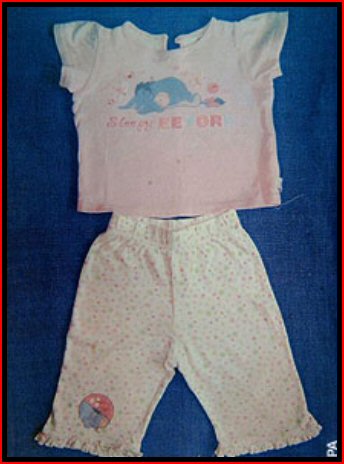
It is fully three years since readers’ attention was brought to the possibility of the McCanns’ having prepared for the disappearance of their daughter in advance of the putative event. The article in question (A Nightwear Job) provoked outright hostility on the part of some, and continues to do so. It centres on two photographs of exactly the same subject taken or reproduced with different lighting conditions, the more contrastive of which affords a clue to the blue background against which the subject (a pair of pyjamas) was in fact pictured. Bearing in mind that the upper garment was pink, and appears so in both images, you may find it hard to believe, as I do, that there exists, even today, more than one individual prepared to suggest the background colour is anything but blue in each of them.

Another, altogether spiteful lady (?) has previously, and vociferously, attempted to convince people that the police in Portugal would routinely invite members of the Paparazzi to record evidence for them, submitting out-of-focus, false-perspective prints in the process. A close ally of hers has persisted in reminding his readers that one Luis Forra is credited by his agency (EPA) with the pictures under discussion. Tellingly, Forra is also credited with other daylight photographs (supposedly taken at 11:00 p.m.), one of Madeleine McCann (at age 2), and images from an event that did not take place until several days after his pictures were submitted. Clever man.

“Then prove he didn’t take them!”  They chorus. Well, except to the unremittingly dense, the photographs speak for themselves. Had any professional photographer laid claim to them first hand their agency work would have dried up overnight.  To quote one of my detractors: “They are simply not terribly good photos.” Needless to say Luis Forra has failed to reply to asinine e-mail entreaties from this deluded duo.

A third man (not Harry Lime) has asked for ‘evidence’ that the Police did not take the photographs in question, despite its having been clearly pointed out that they were devoid of ‘flat lighting’, a neutral background and, most significantly, a scaling reference – a protocol to which police forensic photographers are obliged to adhere. Furthermore, a copy of the image was specifically filed by police as ‘information from the family’, not as a ‘diligence’ of their own. (It is elsewhere claimed by one of the Luis Forra advocates that this is the only image, so archived, to bear the Portuguese ministry’s copyright mark. That claim is demonstrably false. At least three of the marina photographs carry the same mark, partly visible between the areas of dense black).

Intellectual rigor is seemingly lacking among these Wizards of Oz.

This follow-up piece though is about more than the questionable motives of others. To come straight to the point, should the pyjamas in those photographs have belonged to Madeleine McCann, then the story of her abduction can have no foundation whatsoever, since she is supposed to have been wearing them at the time, and stolen clothes do not mysteriously reappear for photo-shoots.
In support of the conjecture that they were indeed Madeleine’s pyjamas, we have visible evidence of their size, of their having been washed (and therefore previously soiled - which chimes with Kate McCann’s tale of tea drinking) and Kate McCann publicly saying so herself (“So these are actually, apart from the size and the button on the back which Madeleine’s doesn’t have, these are actually the pyjamas that Madeleine was wearing when she was taken”).
O.K., so Kate endeavoured to distinguish between the pyjamas she and husband Gerry were holding up for the cameras and those actually worn by Madeleine. But the distinction is more apparent than real. What do we genuinely know of the size (they seem plenty big enough to me)? Nothing, other than what Kate chose to mention, which was… nothing of substance. The same goes for the button aspect, which came to light once the PJ had requested a contemporary pair from M&S in the UK and received trousers accompanied by a simple T-shirt in response. Otherwise, instead of a pair of pyjamas ‘very much like’ those worn by Madeleine, we have her mother re-iterating that they were actually hers.

During other appearances before the European media, Kate reinforced the dissociation between Madeleine’s pyjamas and the touring pair, claiming the latter were in fact Amelie’s and ‘a little bit smaller’. That of course makes the ‘not Madeleine’s’ stance noticeably firmer. Nonetheless, the principal question posed at the very beginning of my previous article on the subject was not that of whose pyjamas featured in the photographs, but who took them (the photographs, not the pyjamas) and, no less significantly, when?
Needless to say, the loud-mouthed and foul-mouthed alike volubly contradicted my point of view. ‘They could have been taken by anyone, anywhere’ is about as solid an argument as the denial that Madeleine could ever have lain dead inside apartment 5A of the Ocean Club when viable candidates for the role of corpse number precisely one. The impetus to demand ‘proof ‘of a negative statement (i.e., that the photos in this instance were not taken by a third-party) is clearly irresistible to those for whom circumstantial evidence implicating the McCanns in their own daughter’s disappearance is anathema for whatever reason.
Ever since Gerry McCann’s “She’s out there until proven otherwise” invitation to prove Madeleine was not abducted, there has been no shortage of cocksure commentators adopting the same strategy. It is not quite as fail-safe as they may imagine however. As touched upon earlier, should it be accepted that Madeleine’s pyjamas toured Europe after her reported abduction, then the idea that she and her clothing were stolen together would clearly be untenable. But even if those pyjamas were really Amelie’s from the outset, and not merely foisted upon the infant simply in order to bolster that claim, questions pertaining to the photographer’s identity and chronology remain.

So what if those Eeyore pyjamas were genuinely purchased for the younger girl?
Overlooking the purchaser’s lamentable sense of sizing, let’s proceed immediately to the extraordinary perspective that would see not just identical pairs of pyjamas bought for two different children but ‘breakfast mishaps’ occurring to both of them, leaving two soiled pyjama tops. Why two? Well, Kate McCann has already described washing one. The other (pictured) was apparently not it, yet also shows clear evidence of a liquid mark, wet or dry, at the neck. If that mark is dry then it is a stain, if wet it is either a fresh stain or a result of washing, the latter being the more likely. Hence the compound coincidence of identical pyjamas undergoing similar treatment, for similar reasons, and to no real purpose into the bargain.

If washing one set of clothes two days before their planned departure was so significant an action as to merit discussion in the context of her daughter’s apparent abduction, then why did Kate McCann describe only the one act of laundry, not both? Why in fact did she bother to describe it at all? Who cares whether the pyjamas the child was wearing were clean?

As Kate wrote in her book:

“The only other unexplained detail I remember from that morning was a large, brown stain I noticed on Madeleine’s pink Eeyore pyjama top. I couldn’t recall seeing it the night before and I had no idea how it might have got there. It looked like a tea stain. Gerry and I do drink quite a bit of tea, and Madeleine, too, would have the odd small cup.”

And later…
“I returned to our apartment before Gerry had finished his tennis lesson and washed and hung out Madeleine’s pyjama top on the veranda.”
Unsurprisingly, Amelie, not yet three years of age at the time, is not identified as a tea drinker.

The washing of Amelie’s pyjamas, whether it occurred or not, was clearly of lesser importance, to the extent that there is no record of its ever happening. In point of fact Kate makes no mention whatsoever, in either her police statements or her book, of ‘Amelie’s pyjamas’.

The tale of the tea-stain has the stamp of a retro-fit explanation for something or other. What that something might be is of course a matter of conjecture, but the story did not make its appearance until Kate McCann’s 6 September statement as Arguida, by which time she would already have escorted those Eeyore pyjamas around Europe and been more than familiar with the published images of them, which clearly show a liquid mark of some kind at the neck. The problem with explaining this mark away as the infamous tea-stain, however, is that she has also described washing the pyjama top on the very morning she claims first to have noticed the stain, Thursday May 3. Hence, any photography of Madeleine’s stained pyjamas can only have been undertaken before then, i.e., hours before Madeleine was reported missing. Perhaps that is why those same pyjamas had to become Amelie’s without delay.

The specificity of pyjama ownership is one question, the photographer’s identity quite another. Ironically, as much as the original background within the disputed photographs points toward a certain party, or parties, as having been responsible, it also points directly away from the dismissive ‘anyone could have done it’ point of view.

If, while visiting a holiday resort in sunny Portugal, or even working in one, you were asked to take a photograph or two of a young child’s pyjamas, wouldn’t you think to lay them on the floor (a table-top being obviously problematic), stand directly above and have the entire image clearly in your viewfinder? You might even decide to deal with the upper and lower garments separately, as did the PJ, so as to guarantee capturing both aspects fully ‘in frame’. That is unless the intention were to make the photographs seem ‘official’; something the appearance in the picture(s) of ceramic floor tiles would not lend itself to. So instead you opt for an item of soft furniture as your background - a bed perhaps - in any event, an item coincidentally upholstered in material identical to that found in apartment 5A, and the same colour to boot. And would you not be all the more surprised if asked to wash the pyjamas beforehand, especially if they had already been washed very recently?

Ironically, this very same viewpoint is expressed by the self-assured ‘Luis Forra’ spokesperson, who published the following on 29 July last year (2018):

“It seems totally ludicrous that Kate or Gerry would go to the effort of flipping a sofa, or removing cushions, in order to take a photo. Why not use a bed, the coffee table, or the dining table? It's inconceivable that the sofa would have been flipped, or cushions removed, with so many other, easier options available. Besides which, in the original photograph the background wasn't blue!”

You will notice that this critic too struggles with the concepts of ‘contrast’ and ‘brightness’ in the handling of digital photographs. It’s as if he’d never even bothered to look at a colour palette. Trust me. If the same subject in each of two photographic reproductions is pink then the background, in this case, is fundamentally blue, be it sky blue, air force blue or any other shade of blue. In any case, why should the Press Association or the Telegraph have seen fit to turn ‘not blue’ into ‘cobalt blue’ before publishing their picture?

What this closing discussion brings to the fore is the idea that the photographer’s choice of background was not haphazard, but deliberate to a degree no casual ‘assistant’ would spontaneously have considered. It was a deliberate effort to disguise the pictures’ origin and make them appear as ‘official’ as the early media headlines subsequently labelled them. It succeeded for years, inasmuch as no-one questioned that textile background, the origin of the garments, the absence in the pictures of a police imprimatur, the shadows that aren’t, the imprecise focussing, or the parallax (converging parallels) more obvious to the professional than the untrained eye. 

Such are the questionable details encompassed by this instance of ‘information from the family’ they render the objections cited above about as robust as straw men standing beside a bonfire.

http://news.bbc.co.uk/1/hi/uk/6719561.stm

'The pyjamas are identical to those Madeleine was wearing and belong to her two-year-old sister Amelie.' (This ‘quote’ is in fact reported speech, the statement appearing three paragraphs beneath the sub-heading ‘Fantastic support’.

https://www.youtube.com/watch?v=YQ3ForLXJT0

1:35 Kate McCann:

"So these are actually, apart from the size and the button on the back which Madeleine's doesn't have, these are actually the pyjamas that Madeleine was wearing when she was taken."

Further articles on the pyjama problem can be found on the excellent Pamalam site:

In particular:   10-09-2013  'Not a leg to stand on'22/11/2013 'A Bedtime Story'  and 
18-01-2014  ' Laid to rest'

To find these on Pamalam's site, scroll down to bottom of list and select 'Nigel's McCannfiles'.

A numbered and alphabetical list will appear and for Dr. Roberts and the list numbers 87 to 92 refer to the years 2009 to 2014 .

http://fytton.blogspot.com/2019/11/the-nightwear-continues.html

A Nightwear Job http://onlyinamericablogging.blogspot.com/2016/03/a-nightwear-job-by-dr-martin-roberts.html

By Dr Martin Roberts
March 9, 2016


As published in the Telegraph

Author unknown

In the very nearly nine years since the disappearance of Madeleine McCann, and the eight since the parents had their arguido status formally withdrawn, one simple question has passed publicly unanswered, probably because the answer appears obvious and the question therefore not worth the asking. I shall ask it nevertheless:

Who took the McCanns' 'official photograph' of Madeleine's pyjamas?

The image in question was 'released' to the world's media in the late afternoon of 10 May, 2007, following a press conference that day. It was no doubt assumed by many that, since the PJ released the photographs (there is more than one), the PJ themselves must have taken them. Yet a film distributor who arranges the release of a 'blockbuster' is hardly likely to have spent the previous months/years actually doing the filming.

With this seed of doubt in mind, one might consider what the PJ did with their photograph(s), adhering all the while to the worldwide practice, among law enforcement agencies, of 'continuity', whereby the progress of evidence through the system, in whichever direction, is recorded at each step along the way. Whereabouts, then, did they file this particular 'diligence' of theirs?

Within the relevant Forensic report (23 November 2007) are references to the following images, together with cognate views of a pair of pyjama trousers:


A far cry from earlier publicised representations you will admit.

Why on earth should the PJ have seemingly undertaken the same photographic work twice, involving two quite different sets of pyjamas?

The forensic record (of garments correctly pictured alongside a scaling reference, i.e. a ruler) is that of a pair of pyjamas supplied on request by M&S (UK), afterwards forwarded to the Forensic Laboratory in Lisbon by Goncalo Amaral, together with a covering letter dated 7 June. It has nothing whatever to do with the official photograph released in early May. In fact the clothing pictured has more in common with that featured in the retailer's own contemporary stock photograph, a copy of which was sent to the Algarve Resident, again on request, and which the 'Resident' published on 8 May - two days before the official release.


As published by the Algarve Resident

During a press call at the Amsterdam Hilton, on 7 June, Kate McCann took pains to explain that the pyjamas being exhibited at that time were in fact Amelie's, and that Madeleine's were not only bigger but did not feature a button-fastening t-shirt. Only a couple of days earlier the same pyjamas, again described as 'Amelies' and 'a little bit smaller', were presented on 'Crimewatch', but without reference to the button discrepancy.

It stands to reason of course, that, Madeleine McCann's pyjamas having been abducted, a surrogate pair would have been required for photographic purposes, in the event of there being no extant photographic record of the clothing in question. But appropriate photographs were to hand. They already existed. One version, as we have seen, was published by the Algarve Resident, another by the BBC. The McCanns' 'official' version was consistent with neither of these. With the PJ yet to physically access a representative set of pyjamas, why should they have been called upon to photograph anything else for immediate release?

There is no record of their having done so. Ergo they did not. So who did? And where did the pyjamas come from that enabled them to do it?

Addressing the second of these questions first, the garments featured in the PJ release cannot have come from M&S locally, since all their Portuguese branches had been closed years before. Had they come from M&S in the UK they would obviously have resembled the pair sent to (and genuinely photographed by) the PJ. A pointer to their origin is, however, to be found within the case files.

Alongside a suite of photographs taken at Lagos Marina by Kate McCann is an introductory memo, written by DC Markley of Leicester Police on or about the 8 May and headed up, 'Information from the Family'. Here also one finds the only copy (in black and white) of the McCanns' official photograph of Madeleine's pyjamas (Outros Apensos Vol. II - Apenso VIII, p.342). Rather than its being a PJ production, afterwards passed to the McCanns, it seems the photograph was actually a McCann production fed to the PJ, an observation wholly concordant with the fact that it was actually the McCanns who first revealed this photograph to the press, on Monday 7 May, three days before the PJ released it (as reported by Ian Herbert, the Independent, 11.5.07).

Any illusion that the image in question was the result of a McCann representative's commissioning their own studio photograph of 'off-the-shelf' UK merchandise may soon be dispelled. It is an amateur snapshot. Taken in ambient (day) light, against a coloured (as opposed to neutral) background, it is slightly out of focus and displays detectable signs of parallax. It is not something even a journeyman professional would admit to.

And yet, bold as brass, it represents 'information from the family'.

Perhaps it was produced by a member of the McCann entourage that descended on Praia da Luz over the long weekend 4-6 May? Then again, perhaps not. As Kate McCann explains in her book, 'madeleine' (p.109):
“Everyone had felt helpless at home and had rushed out to Portugal to take care of us and to do what they could to find Madeleine. When they arrived, to their dismay they felt just as helpless – perhaps more so, having made the trip in the hope of achieving something only to discover it was not within their power in Luz any more than it had been in the UK.”
On Kate McCann's own admission, to a House of Commons committee no less, neither she nor husband Gerry were any more capable of keeping cool under fire during this time. Having earlier (August 2007) told her Pal, Jon Corner, "the first few days.…you have total physical shutdown", she went on to advise the House that, despite being medically trained, she and her husband "couldn't function" (John Bingham, the Telegraph, 13.6.2011).

Well someone on the McCann side of the fence managed to function in time for the parents to appear before the media on 7 May with a photograph that, so far, no-one seems to have taken, and of clothing which, other things being equal, ought not even to have existed anywhere inside Portugal, except, perhaps, in the clutches of a fugitive abductor. But, of course, other things are anything but equal.

Non mihi, non tibi, sed nobis

A month after the world's media were first shown a picture of something resembling Madeleine McCann's 'Eeyore pyjamas', a real set was being touted around Europe. Described by Kate McCann as 'Amelie's' and being 'a little bit smaller', they were held aloft for the assembled press brigade, without any one of them questioning the pyjamas' origins either. Being 'Amelie's' was quite enough, apparently, to justify their also being in the McCanns' possession at the time. Since when though? Gerry McCann did not return home to Leicester from Praia da Luz until 21 May, time enough for him to have raided his daughter's wardrobe for something he might need on his European travels, but way too late to have met any 7/10 May deadlines.

It seems, then, as if the two ingredients required to achieve an earlier photograph of 'Madeleine's' pyjamas (the photographer and the subject) were both missing. So how was it done?

What at first appears to be a riddle is soon solved when one realises that the pair of pyjamas which accompanied the McCanns around Europe was the very same pair that starred in their 'official photograph' taken earlier. Kate McCann took public ownership of them before the television cameras the moment she referred to them as 'Amelie's'. On close inspection these pyjamas (Amelie's) are revealed as identical to the pair previously pictured in both the Daily Mail (10.5.07) and the Telegraph (see top of page here), down to the stray threads dangling from both upper and lower garments. This means that 'Amelie's pyjamas', for want of a better description, were also present with the McCanns since the start of their Algarve holiday.


As published by the Daily Mail

Suddenly the question ceases to be 'Who photographed a representative pair of Eeyore pyjamas?' and becomes, instead, 'Who photographed Amelie's pyjamas?' Furthermore, if everyone was feeling so shell-shocked as to render them incapable from the Friday, when did they have the presence of mind to take the requisite pictures?

We begin to edge toward a sinister conclusion once we take particular account of the literal background against which these particular pyjamas were photographed.

A coarse woven tale

Unlike the various studio renditions of Eeyore pyjamas to which we have been introduced, the McCann's official photograph(s), versions of which were published by both the PJ and the UK media, present the subject laid out against a blue textile, rather than the more customary piece of artist's board. This blue upholstery, for that is unquestionably what it is, helps define who, among the Tapas 9, might have been the photographer.

The Paynes, the Oldfields and the O'Briens can be ruled out. Only the Payne's apartment incorporated any soft furnishings in blue, but of a different quality to the plain open-weave material on display here. During the early morning of Friday 4 May, 2007, the McCanns were re-located to alternative accommodation in apartment 4G - another in which blue soft furnishings were conspicuous by their absence (it was appointed in beige throughout).* Added to which the concern, lest we forget, is with photography involving a pair of pyjamas known to have been in the McCanns' possession from the outset.

In his statement to Police of 10 May, Gerry McCann as good as exonerated himself of all blame concerning picture taking:

‘Asked, he clarifies that:
apart from the personal photos already delivered by him to the police authorities after the disappearance of his daughter MADELEINE, he has no others in his possession. 

He adds that it is:
his wife KATE who usually takes pictures, he does not recall taking any pictures during this holiday, at night.’

Notwithstanding accounts of how, from the Friday onwards, the McCanns, their nearest and dearest, all fell mentally and physically incapable (of anything save visiting the pool, the beach bar, and the church on Sunday morning), Kate McCann early on made a very telling remark, concerning photography, to journalist Olga Craig:

"I haven't been able to use the camera since I took that last photograph of her" (The Telegraph, May 27, 2007).

That statement alone carries with it a very serious connotation. However, we still have a distance to travel.

The more contrastive of the two images reproduced here displays what appear to be areas of shadow, when in fact there are no local perturbations at the surface of the fabric to cause them. Similarly, the dark bands traversing the t-shirt appear more representative of what is actually beneath it. These visible oddities suggest the material is in fact damp and 'clinging' to the underlying upholstery.

There is, as we know, an anecdote of Kate McCann's, which sees her washing Madeleine's pyjama top on the Thursday morning. As re-told in her book, she does so while alone in the family's apartment:

"I returned to our apartment before Gerry had finished his tennis lesson and washed and hung out Madeleine’s pyjama top on the veranda."

Size matters

As previously stated, Kate McCann was careful to bring the attention of her Amsterdam Hilton audience, to Madeleine's pyjama top being both larger and simpler than the version she was holding in her hands at the time. She was inviting them instinctively to associate garment size with complexity - the larger the simpler in this instance. It would mean of course that Madeleine's 'Eeyore' pyjamas, purchased in 2006, would not have been absolutely identical with those of her sister Amelie, purchased whenever (but obviously before the family's 2007 holiday on the Portuguese Algarve).

On 7 May, the Sun reported that:
"The McCann family also disclosed that on the night of her disappearance Madeleine was wearing white pyjama bottoms with a small floral design and a short-sleeved pink top with a picture of Eeyore with the word Eeyore written in capital letters.
"The clothes were bought at Marks and Spencer last year."
In his 7 June covering letter to the Forensic Laboratory in Lisbon, Goncalo Amaral conveys the following specification in relation to the pyjamas he was intent on sending for examination:

"The Pyjamas are from Marks and Spencers, size 2 to 3 years -97 cm.
"The pyjamas are composed of two pieces: camisole type without buttons"
Since these items could only have been supplied to the PJ in mid-07, they must have represented that year's style, as it were, for 2-3 year olds. Madeleine would have been four years old by this time. However, Kate McCann would have people believe that 'Amelie's' pyjamas, sporting a button, were designed to fit an even younger child. Had Kate purchased the appropriate pyjamas for Amelie in 2007 of course, they would not have had a button at all.

They must therefore have been purchased in the same epoch as Madeleine’s own, i.e. during 2006, when Amelie would have been a year younger and somewhat smaller even than when the family eventually travelled to Portugal the following year.

The significance of all this becomes apparent once we consider those photographs which show how the pyjamas held aloft by the McCanns at their various European venues encompassed half Gerry McCann's body length at least. Photographs of the McCanns out walking with their twins in Praia da Luz, on the other hand, illustrate, just as clearly, that Amelie McCann did not stand that tall from head to toe. Even In 2007 she would have been swamped by her own pyjamas, never mind the year before when they were purchased.

In conclusion, the McCanns' 'official photograph', first exhibited on 7 May, appears to be that of a damp pair of pyjamas, too big to have been sensibly purchased for Madeleine's younger sister that Spring, and most certainly not the year before. The subject is set against dark blue upholstery of a type not present in any of the apartments occupied by the McCanns or their Tapas associates immediately after 3 May. Kate McCann has explained, over time, how she was alone in apartment 5A that morning, in the company of a damp pyjama top (having just washed it) and how, from that afternoon by all accounts, she 'couldn't bear to use the camera', an automatic device (Canon PowerShot A620) belonging to a product lineage with an unfortunate reputation for random focussing errors.

Madeleine was not reported missing until close to 10.00 p.m. that night. If Madeleine McCann's pyjamas were not in fact abducted, then nor was Madeleine McCann.

Martin Roberts

*See the extended search videos here: http://www.mccannfiles.com/id167.html

Grateful thanks are due to Nigel Moore for collating a number of highly relevant photographs and media reports in connection with this topic.


If a fellow thought that the Metropolitan Police Service was a functioning entity, he might call for the arrest of the McCanns based on what is written and depicted here. Ed.
---------------
Discussion on CMOMM: https://jillhavern.forumotion.net/t12555-dr-martin-roberts-a-nightwear-job

Popular Posts

My Blog List

My Blog List